3D visualization news, November 2026: what changes for real-estate marketing
News · Orest Moskal · 2026-11-12 · 4 min
Most 3D software news is written for artists. This digest is for the people who buy visualization: developers, brokers, architects and marketing teams. This month the main tools behind renders and 3D tours changed in ways that will show up in what you can put in front of buyers — here is what happened, and what it means for your next launch.
1. Real 3D scans and rendered buildings in one image
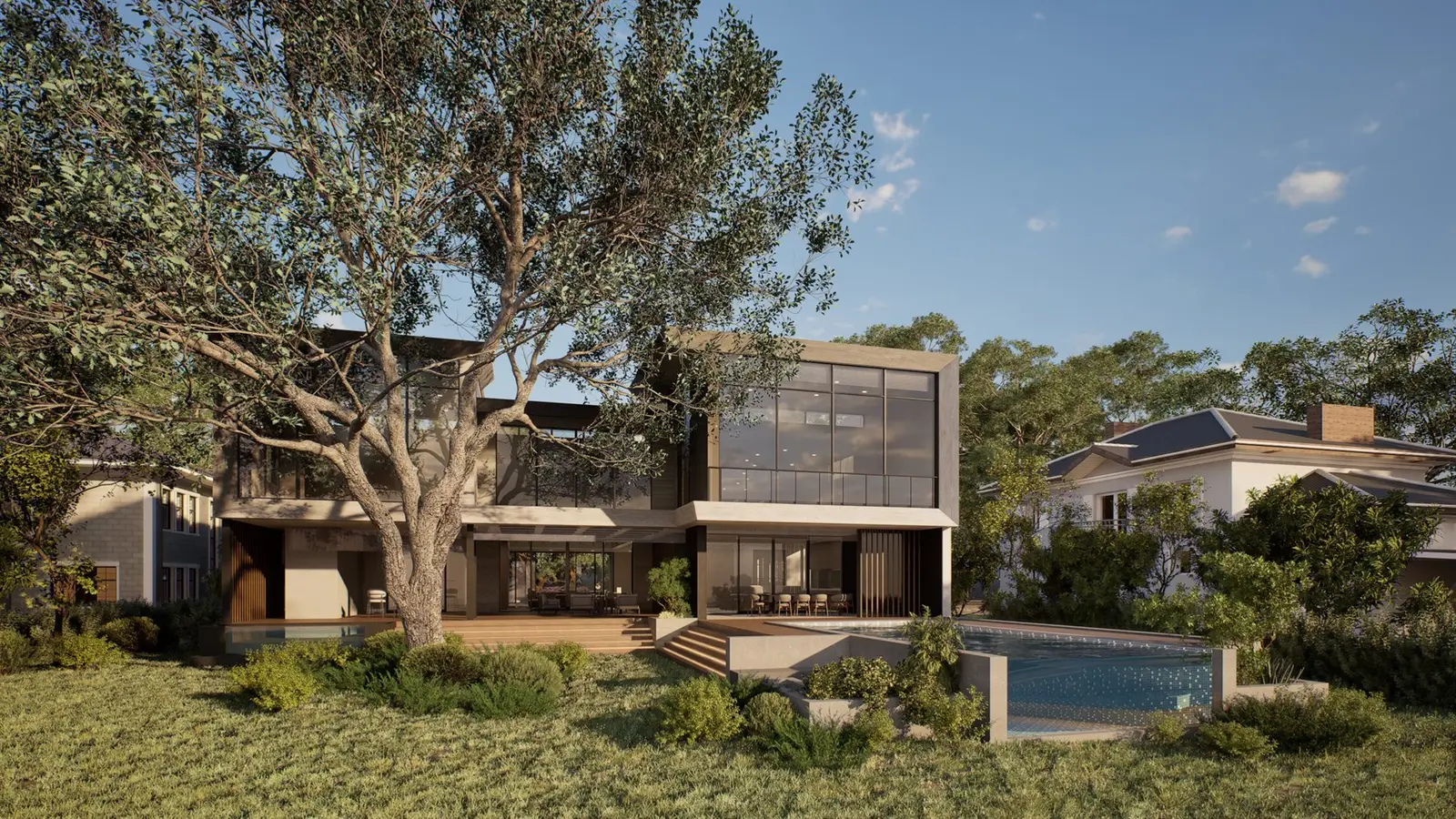
What happened: Gaussian splats — 3D scans made from ordinary photos or drone video that look like the real place — are now supported directly in the main production tools. Autodesk added editable splats to 3ds Max in July; Blender 5.3 (released 10 November) imports and renders them; and Corona 16, a renderer widely used for architecture, now lets splats react to the scene's lighting.
What it means for you: the real site — the street, the neighbouring buildings, the garden, the view — can be captured as it is and combined with the rendered project in the same image or film, with consistent light. For a development on an existing site, that means context buyers recognise instead of a generic 3D background.
2. 3D tours get a common format
What happened: the Khronos Group, which maintains the glTF standard used to share 3D content on the web, has ratified an extension for Gaussian splats. It defines how a splat scene is stored, so it can move between capture apps, 3D software and web viewers.
What it means for you: a 3D tour of a show-home or a site is less likely to be locked into one provider's viewer. Ask your studio which format they deliver, and make sure you receive the source files, not just a link.
3. Believable lit windows on tower façades
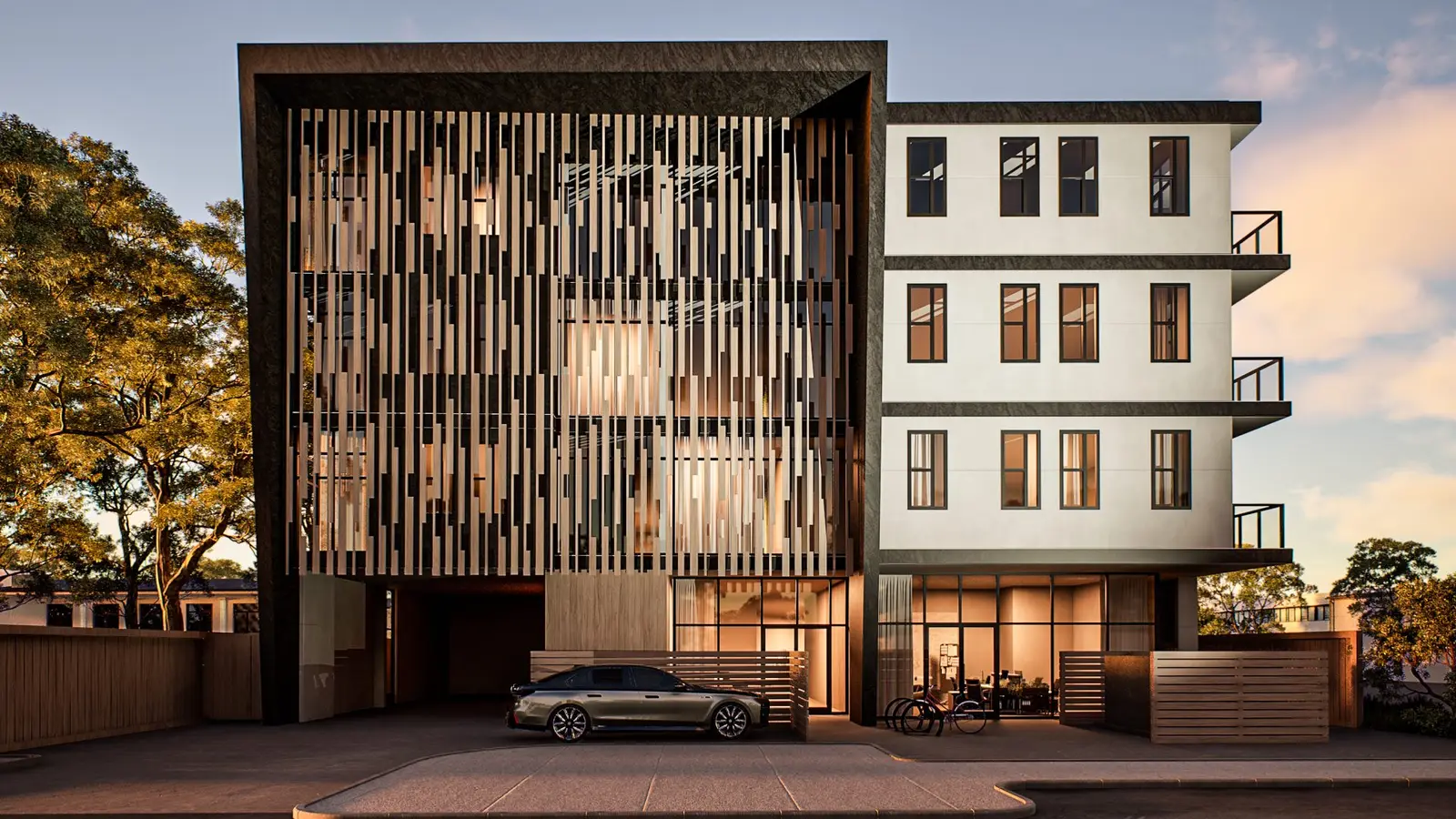
What happened: Corona 16 added 'parallax interiors' — a technique that shows convincing rooms behind exterior windows without modeling the interior of every apartment.
What it means for you: dusk and night views of residential towers and hotels — where empty black windows give a render away — become easier to make believable. It is a detail, but it is exactly the kind of detail buyers notice without knowing why.
4. Interactive experiences that open in a browser
What happened: Epic Games released a preview of Unreal Engine 5.9 on 9 November with experimental support for running projects in a web browser with no installation, alongside a set of AI tools. It is a preview, not a production release, and the AI-heavy update has divided developers.
What it means for you: the direction is clear — real-time walkthroughs and configurators are moving towards 'just a link', like a website. It is not production-ready yet; today a link-based 3D tour is best delivered as a splat scene or a streamed experience.
5. AI assistants inside the studio's tools
What happened: Chaos added an AI Assistant with a 'Render Critique' feature to Corona 16 and V-Ray 7.5, and Unreal Engine 5.9's preview opens the editor to AI agents.
What it means for you: AI is arriving as help for the people making your images, not as a replacement for them. It can speed up routine steps; the accuracy of the design and the quality of the final image still depend on the team. We look at this in more detail in our article on AI in architectural visualization.
What to ask your visualization studio this season
- Can you combine a real 3D scan of our site with the rendered project?
- In which format will we receive the 3D tour, and do we get the files?
- How will night views and lit windows look on our façade?
- Which parts of the work use AI tools, and how do you check accuracy against our drawings?
Sources
- Blender 5.3 release notes — Blender Developer Documentation
- Blender 5.3: Splat happens — Digital Production
- Chaos releases Corona 16 for 3ds Max and Cinema 4D — CG Channel
- Autodesk releases 3ds Max 2027.2 with editable Gaussian splats — CG Channel
- KHR_gaussian_splatting extension — Khronos glTF repository
- Unreal Engine 5.9 MegaJam Preview — release summary
- Unreal Engine 5.9 divides game devs with an AI-heavy update — Creative Bloq